Covina roofing,
done the careful way.
Roofing in Covina is east San Gabriel Valley roofing: real summer heat, plenty of ranch homes and tile, and a lot of roofs that have quietly aged out under the sun.
CSLB Lic. #1137536 (C-39) · Licensed · Bonded · Insured · 5.0★ on Google, 72 reviews
A roofer you can actually reach.
Everything here is something you can check in five minutes — on Google, on the CSLB site, or by calling the number above.
- Our office is at 4464 Vista Del Monte Ave, #202 in Sherman Oaks — and we work across Greater Los Angeles, Covina included.
- You talk to Sam, the owner — not a call center. We still answer our own phone.
- Every roof is documented by drone, before and after. The full set is yours to keep.
- Written, itemized pricing — materials, scope, and timeline in writing, never a verbal number.
- A 10-year workmanship warranty, in writing, on every job.
Roof repair, replacement, and inspection in Covina.
Roof repair
Leaks, lifted shingles, cracked tile, failed flashing, skylight curbs. Fixed where the roof actually failed, with photos of the repair.
Roof repair in CovinaRoof replacement
Full tear-off to the deck, new underlayment, and a shingle, tile, or flat system chosen for your roof — with the deck-repair rates written into the agreement before we start.
Roof replacement in CovinaRoof inspection
A free, drone-documented look at what your roof actually needs, and an honest repair-vs-replace answer in writing. No pressure either way.
Roof inspection in CovinaWhat Covina roofs are up against.
Covina sits in the hot east end of the San Gabriel Valley, where summers run long and the inland heat is more intense than anywhere near the coast. That sun bakes south- and west-facing slopes, strips granules from composition shingles, and dries out the underlayment beneath tile years early. The city is built largely of postwar ranch homes and later tile-roofed builds, many shaded by the mature trees of its Old Town and tract neighborhoods, which drop debris into valleys and gutters. Fall Santa Ana winds sweep across the Valley floor and lift loose tabs and ridge tile. There is nothing exotic about Covina's roofing — it is heat, age, and debris — but those three quietly end most of the roofs here, and they are what a good re-roof has to solve.
The roofs we work on most in Covina: Concrete tile on the later builds and remodels; Composition shingle on the postwar ranch tracts; Flat and low-slope over patios and additions.
Most of what we're called for here: Sun-baked, granule-bare composition roofs; Failed underlayment beneath aging tile; Debris-packed valleys and gutters under mature trees.
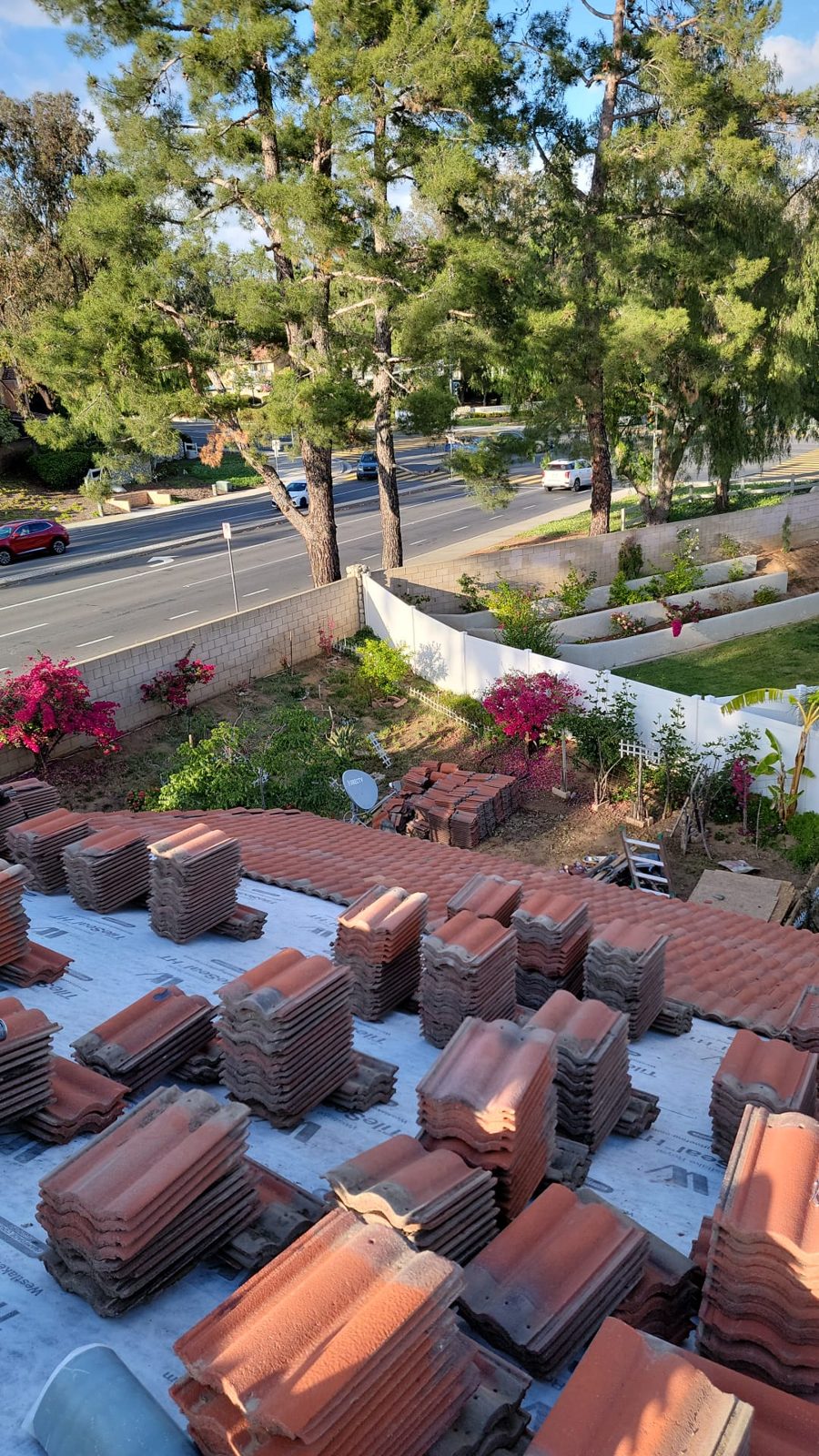
Every stage of our work is photographed by drone so you can see the deck before it's covered. That documentation isn't an extra — it's how we work on every roof.
See more before-and-after drone photosTitle 24, fire zones, and old decking — what applies to your house.
We check what applies to your parcel before we quote, and we'll confirm it with the permitting authority for you.
Energy / cool roof (Title 24)
Covina sits in California Energy Commission Climate Zone 9. Under Title 24, Part 6, a low-slope or flat roof here must use a cool-roof product (aged solar reflectance of at least 0.63 and thermal emittance of at least 0.75 — roughly SRI 75) when you replace 50% or more of the roof or about 1,000 sq ft or more. Steep-slope (pitched) residential roofs in Climate Zone 9 are exempt from the cool-roof requirement, so standard shingle or tile is fine. Small like-for-like repairs generally don't trigger it. See the California Energy Commission standards and the CRRC directory for rated products.
Fire
Most of Covina is flat and isn't in a Very High Fire Hazard Severity Zone, though some northern foothill parcels can be. Confirm your specific parcel. You can check any parcel on the CAL FIRE hazard-zone viewer.
Decking / sheathing
Many older Covina homes were built with spaced 1×6 “skip” sheathing under the original roof. For a modern shingle or tile system — and for a Class A assembly — that decking often has to be overlaid with solid sheathing, and any rotted boards replaced. We confirm exactly what your roof needs with a deck inspection at tear-off, not a guess.
Color & materials
Roof color isn't regulated by code. Where a cool roof is required you need a CRRC-rated product that meets the SRI — and those come in a wide range of colors, not just white.
Full code notes for Covina: Title 24, fire, decking, color
Energy / cool roof (Title 24)
Covina sits in California Energy Commission Climate Zone 9. Under Title 24, Part 6, a low-slope or flat roof here must use a cool-roof product (aged solar reflectance of at least 0.63 and thermal emittance of at least 0.75 — roughly SRI 75) when you replace 50% or more of the roof or about 1,000 sq ft or more. Steep-slope (pitched) residential roofs in Climate Zone 9 are exempt from the cool-roof requirement, so standard shingle or tile is fine. Small like-for-like repairs generally don't trigger it. See the California Energy Commission standards and the CRRC directory for rated products.
Fire
Most of Covina is flat and isn't in a Very High Fire Hazard Severity Zone, though some northern foothill parcels can be. Confirm your specific parcel. You can check any parcel on the CAL FIRE hazard-zone viewer.
Decking / sheathing
Many older Covina homes were built with spaced 1×6 “skip” sheathing under the original roof. For a modern shingle or tile system — and for a Class A assembly — that decking often has to be overlaid with solid sheathing, and any rotted boards replaced. We confirm exactly what your roof needs with a deck inspection at tear-off, not a guess.
Color & materials
Roof color isn't regulated by code. Where a cool roof is required you need a CRRC-rated product that meets the SRI — and those come in a wide range of colors, not just white.
Source: the City of Covina Building & Safety, the California Energy Commission, and CAL FIRE. Roofing codes change and are parcel-specific — confirm with the City of Covina Building & Safety before your project, or call us at (866) 685-3889 and we'll confirm it for you.
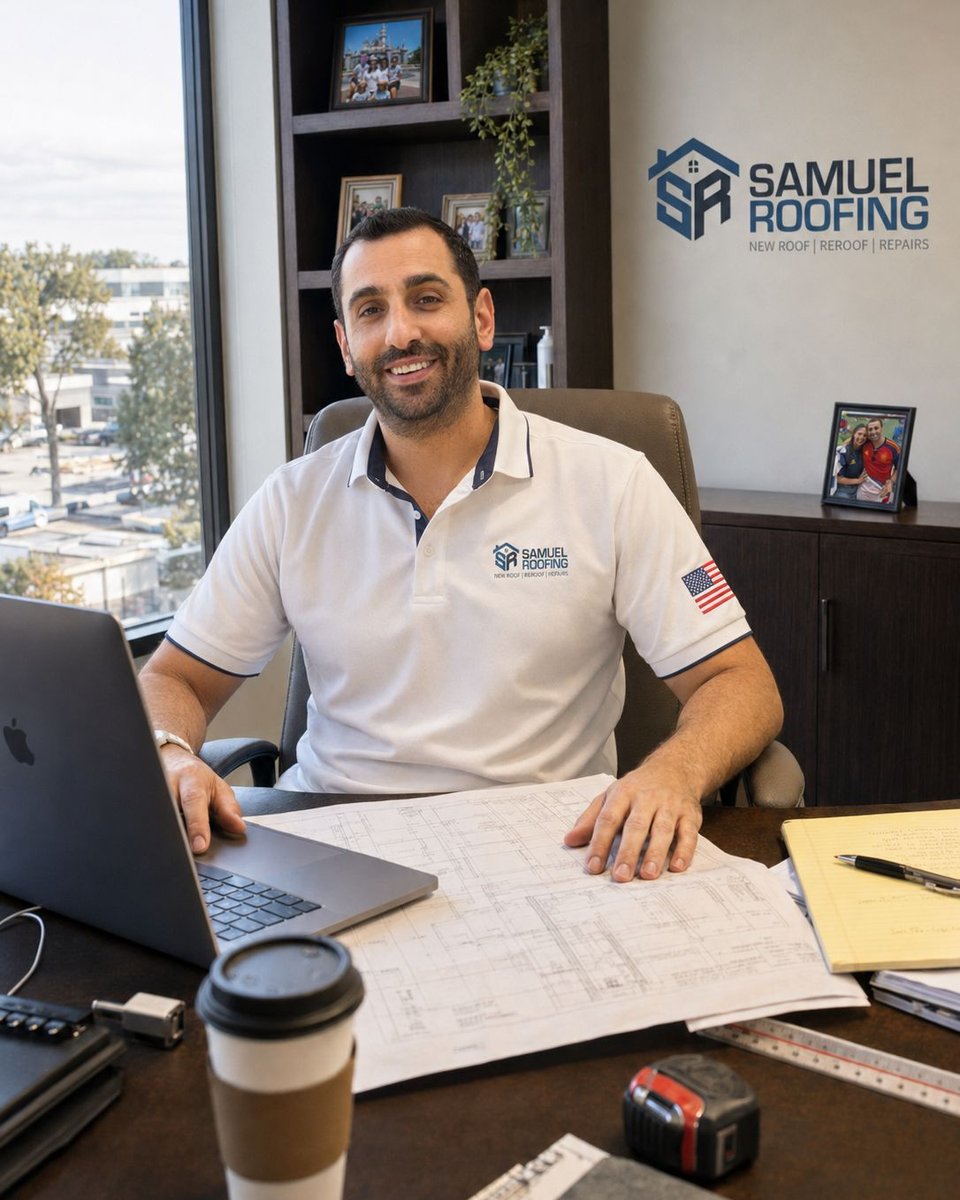
You'll deal with Sam.
Nearly a decade of hands-on roofing experience, a C-39 license, and an office in Sherman Oaks. Sam walks the roof, flies the drone, writes the itemized price, and answers the phone afterward. His answers to the five questions homeowners ask before hiring a roofer are on our homepage.
Book your free inspection in Covina.
We come out, walk the roof, take drone photos, and send you a written assessment within 48 hours. No pressure, no theater.
CSLB Lic. #1137536 · C-39 Roofing · Bonded · Insured
Financing available for qualified Covina homeowners
You don't have to pay for a roof all at once: financing is available for qualified homeowners, subject to qualification — written itemized pricing first, financing second, never any pressure. And because Title 24 cool-roof products are qualifying energy improvements, a Covina re-roof that needs one may also qualify for PACE-style energy financing — ask us and we'll confirm what applies to your property. How roof financing works in Los Angeles →