
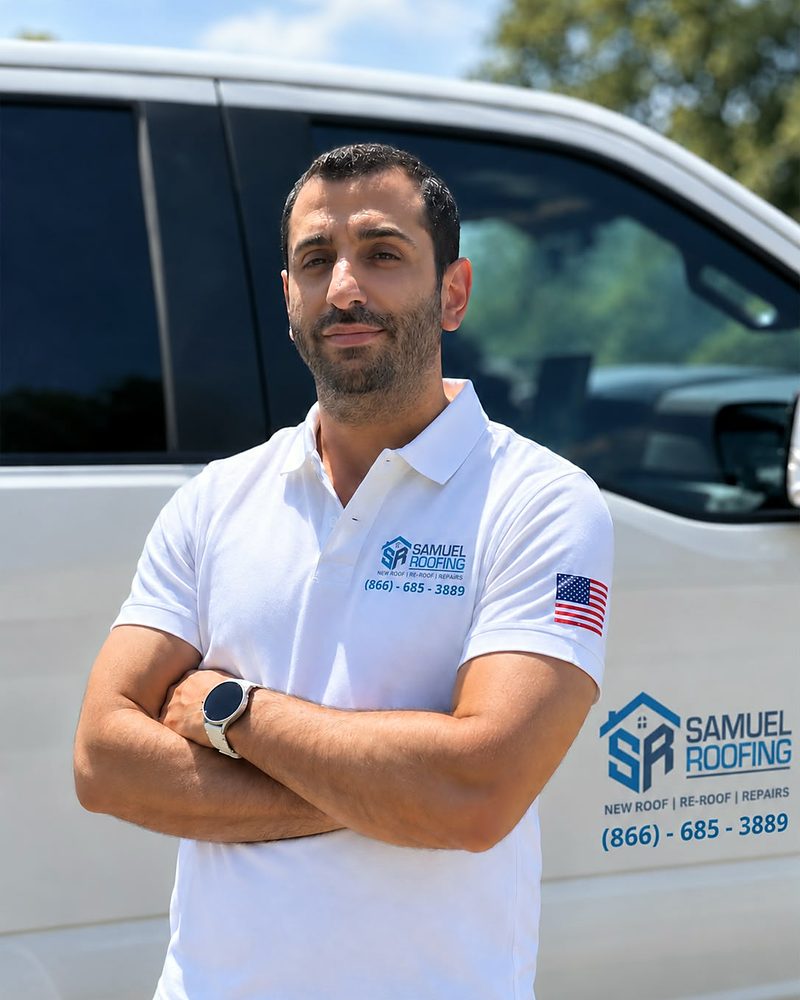
Ask Sam the Roofer.
Sam Shmuel — licensed C-39 roofing contractor · CSLB #1137536 · Licensed · Bonded · Insured · 5.0★ on Google, 72 reviews
Real questions from Los Angeles homeowners — answered straight, no sales pitch, by the person who actually walks the roofs. Nearly a decade of hands-on Los Angeles experience, and I still answer my own phone.
💰 Cost & Pricing
In the LA area, a typical asphalt-shingle re-roof tends to land somewhere around $9,000–$25,000, and tile or larger/steeper homes run higher — LA generally costs more than the national average because of labor, permits, and our fire and Title 24 energy codes. The honest answer is that square footage, pitch, access, how many old layers come off, and material all move the number a lot. That's exactly why I give a free, itemized written quote after measuring your roof — never a guess over the phone.
Because not every quote includes the same work. One bid might assume a quick layover; mine might include a full tear-off, new underlayment, fresh flashing, and proper ventilation. Cheaper isn't always cheaper — it often means skipped steps you pay for later in leaks. When you compare bids, line them up item by item: tear-off, underlayment, flashing, ventilation, warranty, and cleanup. If a quote is vague, that's your answer. Mine is itemized in writing so you can see exactly what you're buying.
My rule of thumb: if your roof is under ~15–20 years old and the damage is isolated, repair it. If it's near the end of its life, leaking in multiple spots, or a repair would cost roughly half of a replacement, replacing usually saves money over the next decade. I'll tell you honestly which side you're on — and if a $600 repair buys you five more good years, I'll say so. I'd rather earn the replacement when you actually need it.
Most straightforward leak repairs in the LA area run roughly $350–$1,200, depending on the source. A single cracked tile or a bit of failed sealant is on the low end; leaks around a chimney, skylight, or valley flashing take more labor and cost more. The trap is paying to fix the stain instead of the source — water travels, so the leak is often feet away from the drip. We start by tracing the leak back to its true entry point before we quote — and on a steep or tile roof, we'll often check it from above with the drone rather than risk cracking tile by walking on it. Then we quote the actual fix and document the finished repair from the air.
Yes — most homeowners don't pay cash for a full roof. There are standard financing options, and in California many homeowners also use PACE programs, where the cost is repaid through your property tax bill. I'll walk you through what's available without pressure, and I'll never push you into a bigger job than you need just to hit a financing number. The goal is a roof that lasts, on terms that actually work for your budget.
🔧 Roof Repair
Often, yes. If the damage is isolated and the rest of the roof has good life left, a targeted repair is the right, honest call — and I'll make it. The two things I check first: can we match your existing material (especially aged tile or discontinued shingles), and is there hidden moisture or decking damage underneath. If those check out, we repair. If a "repair" would just be a band-aid on a failing roof, I'll show you the drone photos and let you decide with full information.
Usually not. A lot of homeowners get told they need a full replacement when one flashing detail or a few tiles are the real problem. One leak on an otherwise sound roof is a repair, full stop. The time it tips toward replacement is when the leak is a symptom of age — brittle, curling shingles or underlayment that's failed across the whole roof. I'll tell you which it is, and I document it from the air so you're not taking my word for it.
Look for water stains on ceilings, peeling paint along the top of walls, granules collecting in your gutters, curling or missing shingles, and — on tile roofs — cracked or slipped tiles that expose the felt underneath. A musty smell in the attic is another tell. Here in LA, sun damage sneaks up on people because there's no dramatic storm; the roof just quietly dries out and cracks. If you're seeing any of these, get it looked at before the rainy season, not during.
A properly done repair on a roof with good life left can last many years — there's no reason a correct flashing or tile repair shouldn't hold for the remaining life of the roof. Where repairs fail fast is when someone smears sealant over the symptom instead of fixing the cause, or uses mismatched materials. We repair to the same standard as a full install and back our workmanship, so a repair from us isn't a temporary patch — it's a real fix.
Yes, and this is one of the most common calls I get in older LA neighborhoods. Individual tiles crack from foot traffic, age, or impact, and they slip when the fasteners or battens give out — leaving the underlayment exposed to the sun. We can swap broken tiles and reset slipped ones, color-matching as closely as your tile allows. One thing to know: if the underlayment beneath is brittle and near end-of-life, spot tile work buys time, but a tile lift-and-relay with new underlayment is the longer-term fix.
🚨 Leaks & Emergencies
Most leaks aren't the field of the roof failing — they're the details. The usual culprits are failed flashing around chimneys, skylights, and walls; cracked or slipped tiles; dried-out sealant; clogged drainage that lets water back up; and worn underlayment on an older roof. In LA, age and UV do most of the quiet damage, then the first real rain finds every weak point at once. The fix depends entirely on the source, which is why step one is always finding where the water actually gets in — not just where it drips inside.
Carefully — because water is sneaky. It enters at one point, travels along the underside of the decking or a rafter, and drips into your ceiling somewhere else entirely. We start in the attic when we can, tracing the stain back uphill to the entry point, then — on a steep or tile roof — confirm it from above with the drone rather than walking the roof and risking cracked tile. Chasing the inside stain is how people end up paying for three repairs that don't work. Find the true source first, fix it once.
Great question — and common in our long dry season. If there's no rain, the usual suspects are attic condensation, an overflowing AC or HVAC condensate line, or a plumbing vent. Sometimes it's a slow roof leak from a recent rain that's only now showing through the drywall. The point is: not every ceiling stain is the roof. We'll check before we sell you a roof repair — if it's your AC drain pan, I'll tell you to call an HVAC tech and save your money.
Don't let it sit, and don't let it collapse on its own. Put a bucket underneath, then carefully puncture the lowest point of the bulge with a screwdriver to drain the water in a controlled way — it relieves the weight and saves your whole ceiling. Move furniture and electronics clear. Then call a roofer. It feels wrong to poke a hole in your own ceiling, but a small drain hole is far cheaper than a collapsed, soaked ceiling. We can usually get out for emergencies — call (866) 685-3889.
During our rainy stretches, demand spikes and good roofers get slammed, but we keep slots open for emergencies and aim for response. If water is actively coming in and you can stay safe, a tarp extended well past the leak buys time — but never get on a wet or windy roof; it's not worth your life. If it's not safe, bucket the inside, move valuables, and call us. We'll talk you through stabilizing it over the phone until we arrive.
🏠 Roof Replacement
Most asphalt-shingle homes are a one-to-three-day job. Tile and specialty roofs take longer — often a week or more — because of the weight, the detail work, and resetting or sourcing tile. Weather, permit inspections, and any surprise decking repairs can add a day. I give you a realistic schedule up front and keep you posted daily, so you're never wondering what's happening on your own house. We also protect your landscaping and do a full magnetic nail sweep before we leave.
Age is the biggest signal: most asphalt roofs in our climate are 20–30 years, tile underlayment is often 20–30, flat roofs 15–25. Beyond age, watch for leaks in more than one spot, widespread curling or balding shingles, sagging areas, and daylight or moisture in the attic. If you're repairing the same roof every rainy season, you're renting time. I'll give you a straight read — sometimes the answer is "you've got a few good years left," and I'm happy to deliver that news.
Sometimes it's allowed, but I rarely recommend it. California code generally permits a maximum of two layers of asphalt shingles — and only if your decking is sound and there's just one existing layer. The problem is an overlay hides whatever's failing underneath, adds weight, and tends to run hotter and shorter-lived. Tile, metal, and slate don't overlay at all. Nine times out of ten a full tear-off to the deck — where we can inspect and fix the wood and lay fresh underlayment — is the roof that actually lasts.
Redecking (or re-sheathing) means replacing the plywood or board sheathing under your roofing once we tear off the old material. You don't always need it — but on older LA homes we sometimes find dry-rot or water-damaged decking that you'd never see until the roof is off. I never know for certain until we open it up, so I'm upfront that it can be a variable, and I show you the damaged wood and the photos before we replace anything. No surprise charges for work I can't prove you needed.
Not automatically. If your gutters are in good shape, we protect them and leave them be. Many homeowners do choose to replace them at the same time — it's efficient while we're already up there, the new gutters match the fresh roof, and you get one coordinated result. If yours are rusting, sagging, or undersized for our downpours, I'll point it out, but I won't tack it on just to pad the invoice. Your call, with honest input.
Late spring through early fall is ideal — long dry stretches, easy scheduling, and warm temperatures that help shingle sealants bond properly. That said, we work year-round; LA's mild climate makes most months workable, and for winter jobs we watch the ten-day forecast and tarp the work so your home is never left open overnight. And if your roof is actively failing, the best time to fix it is before the next storm — not after.
🧱 Materials & Roof Types
For our sun, the standouts are tile (clay or concrete) and metal — both shrug off UV and last decades. Tile fits the Spanish and Mediterranean homes all over LA and can last 50+ years. Quality architectural asphalt shingles are the budget-friendly choice and still perform well, especially the cool-roof rated lines that reflect heat. For flat and low-slope roofs, modern TPO and modified-bitumen systems handle our heat nicely. The "best" one really depends on your home's style, structure, and budget — I'll match you to the right fit, not the priciest.
It's mostly decided by your home's design and slope. Tile suits pitched Spanish/Mediterranean homes and lasts the longest, but it's heavier and costs more. Asphalt shingle is versatile and economical for most pitched roofs. Flat or low-slope roofs — common on mid-century and modern LA homes — need a membrane system like TPO or modified bitumen, not shingles. Many LA homes are actually a mix. I'll look at what you have, what your neighborhood and any HOA expect, and where you want to spend, then lay out the honest trade-offs.
Tile commonly runs roughly two to three times the cost of asphalt shingle once you account for the material weight and the labor to install it properly. Is it worth it? If you're staying in the home long-term, often yes — tile can last 50+ years versus 20–30 for shingle, and it suits LA's architecture and resale. If you're on a tighter horizon or budget, a quality cool-roof shingle is a smart, honest choice. I'll give you the real numbers for both so you can decide — no steering.
Underlayment is the waterproof layer that goes under your tile or shingles — and on a tile roof, it's the part that actually keeps water out. Here's the thing people don't realize: the tile can last a century, but the underlayment beneath it only lasts about 20–30 years. So a tile roof that "looks fine" can be leaking because the felt underneath has failed. That's why so much LA tile work is really an underlayment job, not a tile job. I'll tell you which one you actually need.
A cool roof uses reflective materials that bounce sunlight instead of soaking it up, which lowers your attic temperature and cooling bills — a real benefit in LA heat. And yes, it can be required: California's Title 24 energy code calls for cool-roof compliance when you re-roof more than about half of your roof, depending on roof type and climate zone. The good news is there are cool-roof options across tile, shingle, and flat systems, so compliance doesn't lock you into one look. We handle the code side for you.
Still have a question about your roof?
The fastest answer is a free, no-pressure inspection — we walk the roof, scan it with a drone, and send you a written report you keep.
⏳ Lifespan & Maintenance
Ballpark, in our climate: architectural asphalt shingles 20–30 years, concrete and clay tile 50+ years (with the underlayment needing renewal around 20–30), flat/low-slope membranes 15–25, and metal 40+. Our intense sun is actually harder on roofs than our rain — UV slowly bakes and cracks materials, so an LA roof can age faster than the same roof in a milder climate. Regular inspections and small fixes stretch all of these numbers. If you don't know your roof's age, a free inspection is the easiest way to find out where you stand.
This is the most important tile question in LA — and the answer is usually the underlayment, not the tile. If your clay or concrete tiles are still sound, we do a "lift and relay": carefully remove the tiles, replace the worn-out underlayment beneath, repair any flashing and decking, and set your original tiles back down. You keep the look and the tile you already paid for, at a fraction of a full tile replacement. If a chunk of tile is broken beyond matching, we blend in replacements. I'll show you exactly what your roof needs.
Twice a year is the sweet spot — once before the rainy season and once after — plus a check after any major Santa Ana wind event. Newer roofs can stretch to every few years; older roofs deserve a look more often. The point of inspecting isn't to find reasons to sell you work; it's to catch a $300 problem before it becomes a $3,000 one. Our inspections are free, take about two hours, and you walk away with drone photos and a written report whether or not you ever hire us.
Keep it clean and keep water moving. Clear leaves and debris off the roof and out of the gutters and valleys, trim branches that drop onto or scrape the roof, and don't let moss or standing water sit. After windstorms, scan for slipped tiles or lifted shingles. If you're in a fire zone, debris cleanup doubles as ember protection. And get those twice-a-year inspections — most roofs that fail early didn't fail from one big event, they failed from small things nobody caught. Maintenance is the cheapest roofing you'll ever buy.
It does, and it surprises people. We don't get the freeze-thaw cycles or constant storms that wear out roofs elsewhere — but we get relentless UV and heat, with rooftop surface temperatures that can soar on a summer afternoon. That bakes the oils out of asphalt, makes shingles brittle, and breaks down underlayment and sealants over time. So an LA roof often ages from the top down in the sun rather than from wind damage. It's also why reflective cool-roof materials pay off here more than almost anywhere.
🛡️ Insurance & Wind Damage
It depends entirely on the cause. Insurance generally covers sudden, accidental damage — wind, fire, a falling tree, storm impact — but not age, wear, or neglect. So a roof destroyed by a Santa Ana windstorm may be covered; a roof that simply wore out won't be. Your payout also depends on whether your policy pays replacement cost or actual cash value (which subtracts depreciation), and your deductible. I'm happy to inspect, document any wind damage thoroughly with drone photos, and give you what you need to file — honestly, not by inventing damage.
Sometimes. If the leak comes from a covered event — say wind tore off shingles and then rain got in — the damage is often covered, including the interior water damage. If the leak is from gradual wear, a poorly maintained roof, or an old failed underlayment, that's typically on you. One nuance worth knowing: insurers may cover the interior damage (drywall, flooring) even when they won't pay for the roof itself. Document everything with dated photos, and don't sign off on the first lowball settlement without understanding it.
Start by reading your policy for your deductible and the claim window — many carriers want it filed within 30–60 days. Photograph everything with dates, inside and out. Get a professional inspection and a written scope of the damage before you talk numbers. Then file, and keep records of every call. A good roofer documents the damage clearly so the adjuster sees what you see — we do this from the air. Just be wary of anyone who knocks on your door after a storm promising a "free roof"; more on scams below.
This is a real issue in California right now. Many carriers have tightened up: on roofs 15–20+ years old they may pay only actual cash value (depreciated) rather than full replacement, require an inspection, or decline to renew until the roof is replaced. Some ask for proof of the roof's age and condition. If you're in this spot, a documented inspection helps — and if a re-roof is what keeps you insurable, I'll give you straight pricing. I won't scare you into one, but I'll tell you the truth about where the market is.
Unfortunately, yes — it's part of California's insurance crunch. Carriers can require roof repairs or a full replacement as a condition of renewal, and they can non-renew after an inspection flags an aging or non-fire-rated roof, especially in higher-risk areas. A documented, code-compliant roof — ideally Class A if you're in or near a fire zone — is one of the best ways to stay insurable and sometimes improve your options. If you've gotten one of those letters, call me; I'll help you understand what the carrier is actually asking for.
📋 Permits & California Code
Yes. A re-roof in the City of LA (and essentially every CA jurisdiction) requires a building permit through LADBS. Skipping it isn't worth it — unpermitted roofing can mean fines, a stop-work order, problems with your insurance, and headaches when you sell. A licensed contractor pulls the permit as part of the job; that's normal and it protects you. If a roofer suggests skipping the permit to save you money, treat it as a red flag. We handle the permit and the inspection so it's done by the book.
In LA, residential re-roof permit fees are typically valuation-based — often a couple hundred dollars for a standard home, more for larger or higher-value projects. Timing is usually fast: qualifying Class A or B re-roofs often go through LADBS's express permit process, sometimes same-day, with a required final inspection afterward. Exact fees and rules can change, so we confirm the current LADBS schedule for your project and fold it into your written quote — no mystery line items.
In California, any contracting job over $500 in labor and materials legally requires a CSLB-licensed contractor — and roofing specifically calls for the C-39 Roofing classification. Always verify the license is active before you hire: you can look it up free on the CSLB website. For the record, ours is CSLB #1137536 (C-39), and we're licensed, bonded, and insured — check it. An unlicensed "roofer" leaves you exposed on liability, code, and recourse if something goes wrong. The license isn't a formality; it's your protection.
For asphalt shingles, California code generally allows a maximum of two layers — so if you already have two, a full tear-off down to the deck is required before re-roofing. If you've got one sound layer, an overlay may be technically allowed, though I usually steer people to a tear-off anyway so we can inspect the decking and start fresh. Tile, slate, and metal aren't overlaid at all. We check what's up there during the inspection and tell you exactly which path your roof requires.
Yes — a replacement triggers current code. The big two in our area are Title 24 cool-roof requirements (reflective materials when you re-roof more than about half the roof) and, if you're in a designated fire hazard zone, a Class A fire-rated assembly with ember-resistant details. These aren't optional add-ons; they're how the permit passes inspection. The upside is they make your roof more efficient and more insurable. We build to current code as standard and handle the compliance paperwork, so you don't have to decode it yourself.
🤝 Hiring a Roofer
Go to the CSLB website (cslb.ca.gov), search the contractor's name or license number, and confirm the license is Active and carries the C-39 Roofing classification. Then ask for proof of insurance — both general liability and workers' compensation — and don't be shy about calling the carrier to confirm it's current. A legitimate roofer will hand this over without hesitation. If someone dodges the question or gives you excuses, that's all the answer you need. Verify before any money changes hands.
Ask: Are you licensed (C-39) and insured, and can I verify it? Will your own crew do the work or subcontractors? Can I see local references and photos of recent jobs? What's covered by your workmanship warranty versus the manufacturer's? Who pulls the permit? How do you handle surprises like rotted decking? And how and when do you expect payment? The answers — and how openly they're given — tell you almost everything. A good roofer welcomes these questions; I do.
Know this California law cold: a contractor cannot legally ask for a down payment of more than 10% of the job or $1,000, whichever is less. If anyone demands a big chunk up front — especially cash — that's a bright red flag and possibly illegal. A fair structure is a small deposit, a progress payment, and the balance on satisfactory completion. We follow the law to the letter and put the payment schedule in writing in your contract, so there's never a surprise about what's due or when.
Watch for the door-knocker who appears right after a storm, "finds" alarming damage you can't see, pressures you to sign today, wants large cash payments up front, and can't produce a verifiable C-39 license or local references. The LA City Attorney has publicly warned homeowners about exactly these roof-repair scams. Real roofers don't need high-pressure theater. Slow it down: verify the license, get it in writing, and never pay big money before work is done. If it feels rushed and scary, that's the tactic — walk away.
Two different things, and you want both. The manufacturer warranty covers defects in the materials themselves — the shingles or tile — and can run 10 to 30+ years. The workmanship warranty covers the contractor's installation: if a roof leaks because of how it was put on, that's workmanship. A beautiful shingle installed wrong still leaks, so the workmanship warranty matters enormously. Ours is a 10-year workmanship warranty, and because we're a certified installer for our manufacturers, your material coverage is solid too. Get both in writing.
A real inspection, not a sales call. It's a free, roughly two-hour on-site visit: I walk the roof, scan it from the air with a drone, and check what actually matters — shingle or tile condition, underlayment, flashing at every penetration, valleys, ventilation, and the decking wherever it's visible. You get a written roof report with annotated drone photos, an honest repair-versus-replace recommendation, and a clear, itemized estimate if work is needed. The report is yours to keep whether or not you ever hire us.
We install to major manufacturers' certified specifications. The reason that matters to you is the warranty — a manufacturer certification is what lets us install and register their system so the material warranty behind your roof actually stands behind it. We'll match the right system to your home and budget rather than steer you to one brand.
🔥🌊💨 LA Climate: Fire, Coast & Wind
Class A is the highest fire-resistance rating a roof can earn, and in California's designated fire hazard zones it's required when you build or re-roof most of your roof. Important detail: it's the whole assembly that has to be rated — the covering plus the underlayment and deck preparation — not just the top layer. Concrete and clay tile, metal, and Class-A-rated composition shingles all qualify. If you're in or near the hills, this is central to your roof and increasingly to staying insured. We build fire-zone roofs to the full Class A standard with ember-resistant details.
No — wood shakes and shingles are not allowed in LA's high fire hazard areas, and for good reason: they're essentially kindling in an ember storm. If you have an old wood-shake roof in a brush zone, replacing it with a Class A assembly isn't just code, it's one of the most effective things you can do to protect the house. Tile, metal, and Class-A composition are the go-to replacements. We'll tell you your zone's requirements and the best fire-rated option for your home's style and budget.
Salt air is tough on roofs — and if you're within a few miles of the water in the South Bay or on the coast, it matters. Salt corrodes metal: fasteners, flashing, vents, and gutters degrade noticeably faster near the ocean. The fixes are using corrosion-resistant materials — stainless or hot-dipped galvanized fasteners, coated metal, quality flashing — and staying on top of maintenance. Tile and slate hold up well at the coast; the vulnerable parts are almost always the metal details. We spec coastal roofs accordingly so they don't rust out early.
Santa Anas can gust hard enough to lift edges, ridges, and tiles, and to drive embers into any gap. The defenses are proper edge and ridge fastening, intact and well-sealed flashing, secure tiles, and ember-resistant vents if you're in a fire area. Trim back branches that whip against the roof. The best move is a quick inspection before wind season (late summer to fall) so small vulnerabilities get tightened up before the first big blow — loose now becomes airborne later. We check all the uplift-prone details during an inspection.
In many LA and Orange County communities, yes. Under California's Davis-Stirling Act, HOAs can dictate roofing material, color, and even the exact tile profile, and they usually require written architectural-committee approval before any work starts — sometimes even for a like-for-like replacement. Skipping that step can mean fines or being told to redo the work. We're used to working within HOA standards: we match approved materials and colors and provide the documentation and drone photos your board needs for sign-off. Bring us the guidelines and we'll handle the rest.
Still have a question? Ask Sam directly.
If your roof question isn't answered here, I want to hear it — call me at (866) 685-3889 and you'll talk to me, not a call center. Or Book Your Free Inspection: a no-pressure, two-hour on-site visit with full drone documentation and a free written roof report you keep, whether or not you hire us. That's how we do everything — written pricing, no pressure, no surprises.
— Sam Shmuel, Founder & Licensed Roofing Contractor
Samuel Roofing Inc. · CSLB #1137536 (C-39) · Serving Greater Los Angeles within ~60 miles
Get a straight answer on your own roof.
Book a free 2-hour on-site inspection. You'll get drone photos, an honest repair-versus-replace recommendation, and a written, itemized estimate — yours to keep, no pressure.