
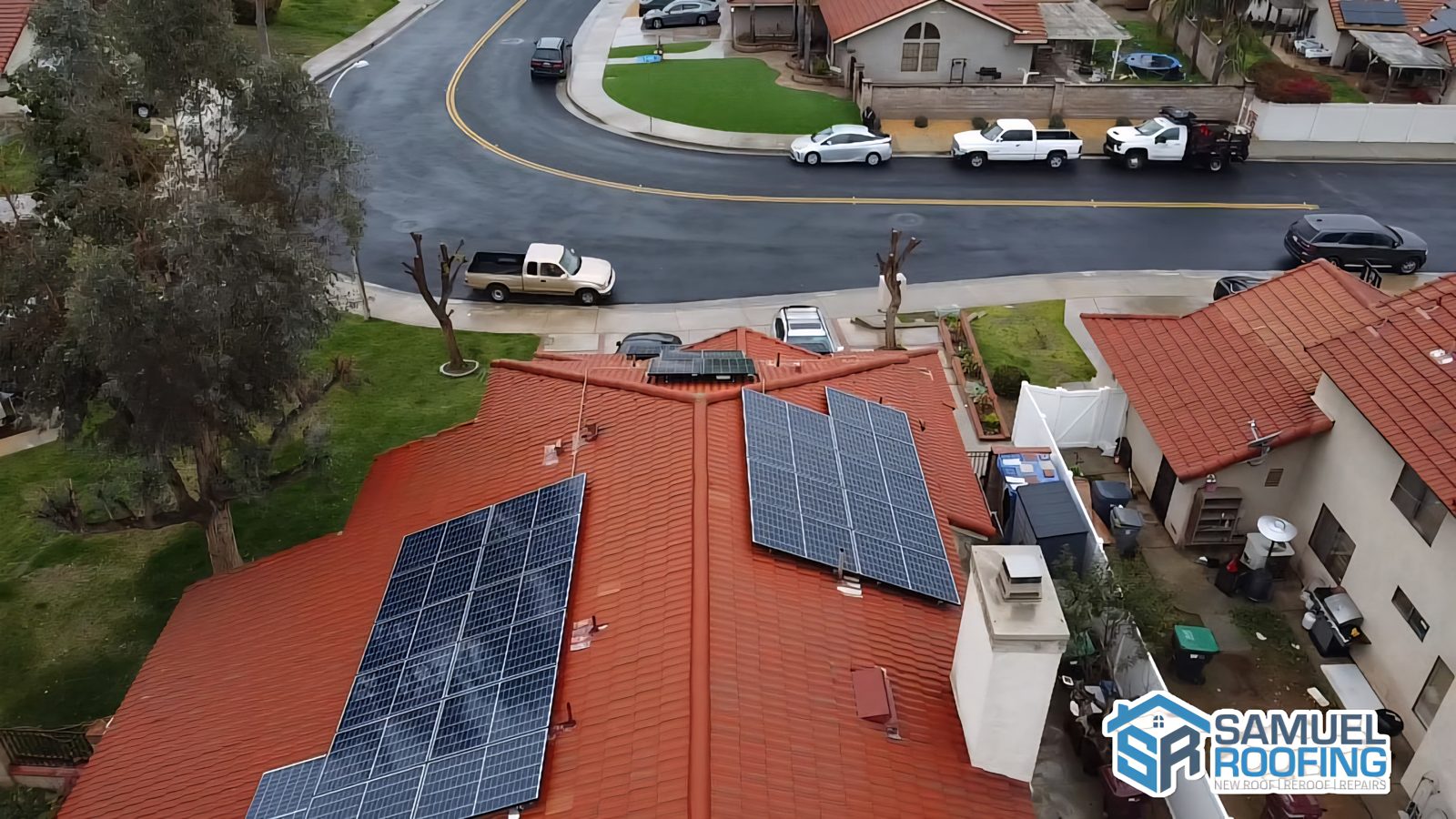
Tile roof repair, reset, and replacement in Los Angeles.
Everything I know about tile roofs in one place: what's actually failing when they leak, when a reset makes sense and when it doesn't, what breaks tile, and what goes under it when we put it back.
CSLB Lic. #1137536 (C-39) · Licensed · Bonded · Insured · 5.0★ on Google, 72 reviews
A roofer you can actually reach.
Everything here you can check in five minutes: on Google, on the CSLB site, or by calling the number above.
- Our office is at 4464 Vista Del Monte Ave, #202 in Sherman Oaks. We work across Los Angeles County and Orange County.
- You talk to Sam, the owner, not a call center. He answers his own phone.
- Every roof is documented by drone, before and after. The full set is yours to keep.
- Written, itemized pricing: materials, scope, and timeline. Never a number over the phone.
- A 10-year workmanship warranty, in writing, on every job.
What applies to a tile roof anywhere in Greater Los Angeles.
Each city page below has the specifics for that city: housing era, its own permit office, its fire map, its HOAs where a public record says so.
- Climate. The City of Los Angeles spans California Energy Commission Climate Zones 6, 8, and 9; the rest of our service area is mostly 8 and 9. In all of them the Title 24 cool-roof rule applies to flat and low-slope sections only. A pitched tile roof is exempt. CEC Title 24
- Fire zone. Fire risk is parcel-specific. The hillside districts, the Santa Monica Mountains, the Verdugo and Santa Susana foothills, and the Conejo Valley edges are Very High Fire Hazard Severity Zones, where the code requires a Class A roof assembly and ember-resistant construction. Clay and concrete tile is a Class A covering; the assembly under it still has to be built to the fire listing. CAL FIRE map
- Permits. City of Los Angeles neighborhoods permit through LADBS. Each incorporated city runs its own building department, and unincorporated pockets go through LA County Public Works. We pull the permit and pass the fee through at cost. LADBS
What's actually failing when a tile roof leaks.
Broken tile is the most common starting point. Tile is strong against weather and weak under a boot. Someone who doesn't know where to step cracks it, and an AC technician servicing a condenser on the roof is a common cause. Water gets in through the crack.
What happens next depends on what's under the tile. Older tile roofs have felt, tar paper, under the tile. The tile is nailed through it with long nails, and every nail leaves a hole in the felt. When a tile breaks above those nails, water finds the holes. Once water reaches old felt, it doesn't last long, and you can end up with several leaks at once.
We don't use felt. We install self-adhered peel-and-stick underlayment, Polyglass among others. When a nail goes through it, the rubberized asphalt seals around the nail. So if a tile breaks later, the layer under it is still holding the water out.
The other common failure is penetrations: pipes and vents. A lot of roofers seal those with black mastic. Mastic is a temporary patch. It dries out and cracks. We flash the penetration properly and seal it with a roof-rated silicone sealant, made for roofing, not general-purpose caulk.
Lift-and-relay, or a new roof.
One thing decides it more than anything: what kind of tile you have.
Two-piece clay barrel tile set in mortar, the older mission style, we generally don't try to relay. It's brittle, and with mortar between the pieces there's no way to lift it without breaking most of it. If that roof has a serious leak, the honest answer is a new roof: new tile, shingle, or metal, whichever you prefer.
Most other tile can be lifted and relaid: S-tile, flat concrete, and clay that isn't mortared in. We take the tile off and set it aside, replace damaged wood, install new peel-and-stick underlayment, and put your original tile back.
What to expect: some tiles break during removal. We replace them with new ones matched as closely as we can, but new tile next to old tile won't match perfectly. It's close, not identical, and we say that up front.
What breaks tile. Usually more than one of these.
- Foot traffic. Tile has to be walked on in specific spots. Someone who doesn't know where to step breaks it, and often doesn't say anything.
- Solar crews. Even careful crews break tile, especially older tile that's gotten brittle. Hire installers who work on tile regularly, and have the roof checked after.
- Equipment on the roof. An AC condenser means technicians walking the roof. If you're doing a re-roof or a tile reset, it's worth moving the condenser to the side of the house, or the attic if that works, and taking anything else off the roof that doesn't need to be there.
- Trees. Overhanging branches break tile when they fall. Trim them before it happens.
- Age. Old tile gets brittle, which makes everything above more likely.
What we do that other roofers skip.
We don't use felt. Some roofers still put old tar paper under new tile to save money. Installed perfectly it can work, but it leaves no margin when a tile breaks. We use self-adhered underlayment rated for the heat under tile.
We don't replace old materials with the same old materials. The point of a re-roof is to leave the roof better than we found it.
We take the details seriously, because that's where leaks start: chimney flashing. Pan flashing at corners and transitions. Proper overlap of the underlayment. Pipes and vents flashed correctly and sealed with roof-rated silicone, not black mastic.
How long tile underlayment lasts.
Old felt holds up while the tile above it stays intact. Once a tile breaks and water gets through, it fails fast. In my experience, often within a season or two.
Self-adhered underlayment lasts far longer, and the manufacturers stand behind it. Polyglass offers a labor-and-material limited warranty of up to 30 years on its self-adhered Polystick tile underlayment systems. That coverage is prorated, it's limited to specific Polystick systems, the roof has to be installed by a Polyglass registered contractor, and the warranty has to be registered with Polyglass. Westlake Royal TileSeal HT, the self-adhered tile underlayment from the company that bought Boral's roofing line in 2021, carries a limited 30-year warranty. Either way: "up to," and it depends on the system that goes on your roof.
What's covered, and what's in writing before we start.
Two separate warranties. My workmanship warranty is 10 years. That's the labor, how the roof was installed; if something fails because of how we put it on, I come back and fix it. The manufacturer's warranty covers the materials and runs 10 to 50 years depending on what goes on your roof. Eagle concrete tile, for one, carries a lifetime transferable limited product warranty, as long as it's registered within two years of the install. I'll tell you exactly which applies to your job before you sign.
The agreement already covers up to 10% wood replacement. Anything over that is priced per sheet, in writing, before we start. California caps the down payment at $1,000 or 10% of the contract, whichever is less, and I follow that exactly. You get three business days to cancel, no reason required. The rest is a payment schedule tied to the stages of your job.
Certified installer for Boral tile (now Westlake Royal) and Eagle tile. Polyglass certified installer. Owens Corning Preferred Contractor, and certified installer for GAF, CertainTeed, and Malarkey.
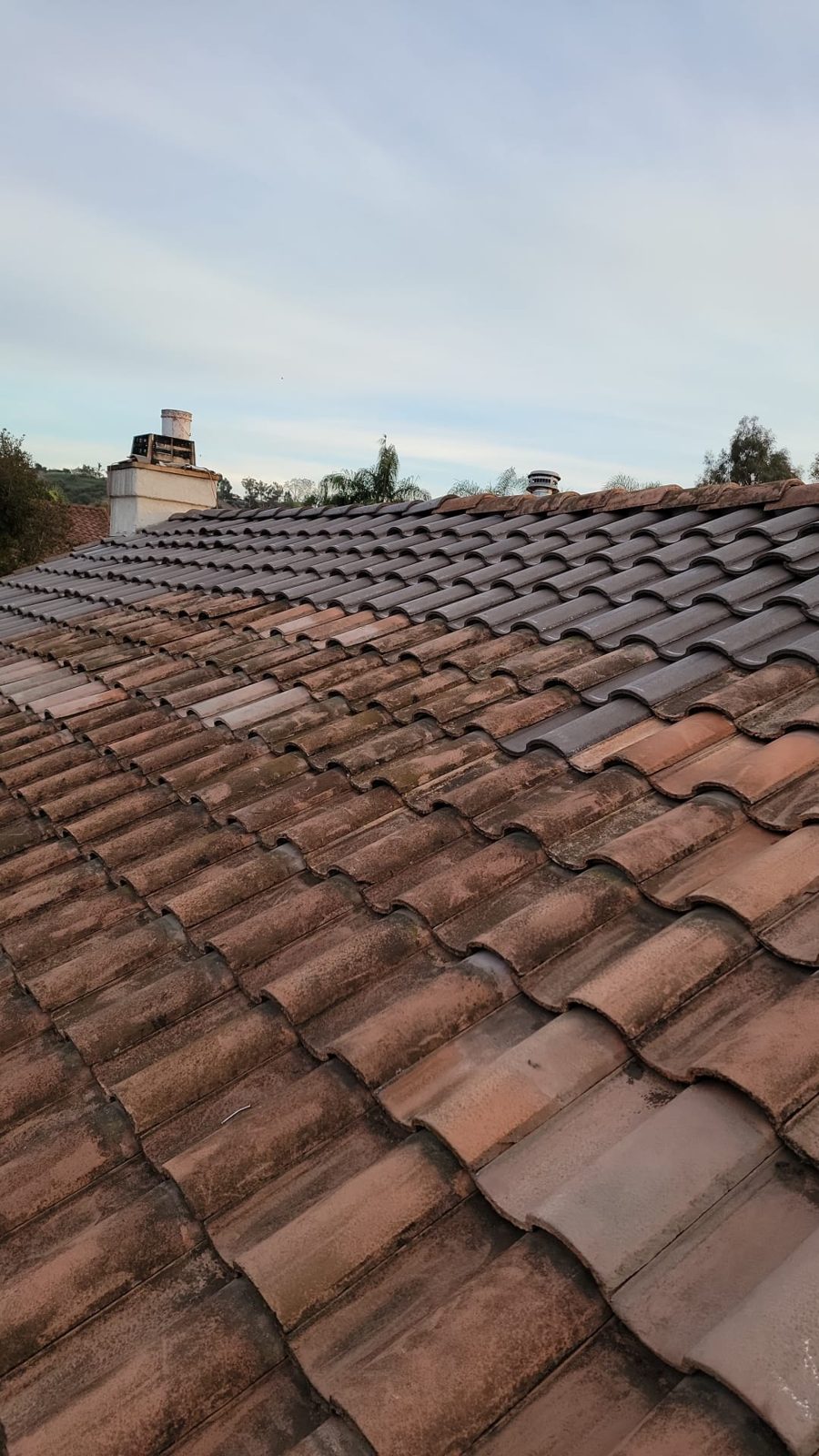
Your tile, off and back on, with new underlayment between.
We take the tile off and set it aside, replace damaged wood, install new peel-and-stick underlayment, and put your original tile back. Broken tiles get matched replacements. Every stage is photographed by drone, so you see the deck and the new underlayment before the tile goes back on.
See more before-and-after drone photosTile questions we get every week.
My tile roof is leaking. Do I need a new roof?
Usually not. Most tile leaks start at a broken tile or a pipe sealed with mastic, with old felt underneath letting the water through. If the tile can be lifted, the fix is new underlayment and your original tile back on. The exception is mortar-set clay barrel tile, which can't be relaid without breaking most of it; a serious leak there means a new roof.
Can you relay my old mortar-set clay barrel tile?
Generally no. It's brittle, and the mortar between the pieces means there's no way to lift it without breaking most of it. If that roof has a serious leak, the honest answer is a new roof: new tile, shingle, or metal, whichever you prefer.
Will the replacement tiles match my old ones?
Close, not identical. Some tiles break during removal. We replace them with new ones matched as closely as we can, but new tile next to old tile won't match perfectly, and we say that up front.
What's under the tile when you relay it?
Self-adhered peel-and-stick underlayment, Polyglass among others, never felt. When a nail goes through it, the rubberized asphalt seals around the nail, so a tile that breaks later doesn't become a leak.
Should I move my AC condenser off the roof?
If you're doing a re-roof or a tile reset, it's worth considering. Technicians walking the roof to service it are one of the most common causes of broken tile. The side of the house, or the attic if that works, keeps feet off the tile.
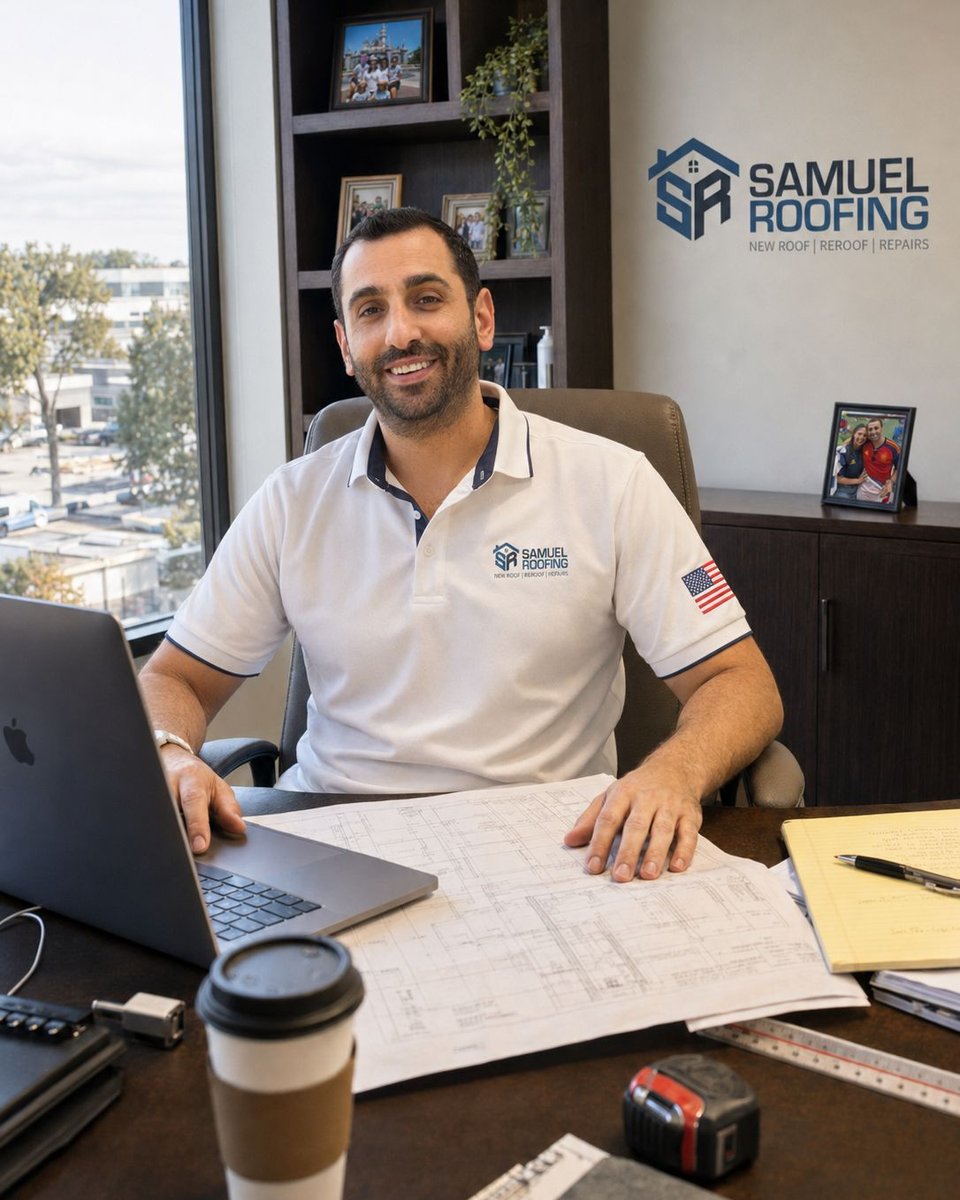
You'll deal with Sam.
Nearly a decade of hands-on roofing experience, a C-39 license, and an office in Sherman Oaks. Sam walks the roof, flies the drone, writes the itemized price, and answers the phone afterward. More of his answers are on Ask Sam the Roofer.
Book your free tile roof inspection.
We come out, walk the roof where it can be walked, fly the drone over the rest, and send you a written assessment. No pressure, and no surprises.
CSLB Lic. #1137536 · C-39 Roofing · Bonded · Insured
Financing available for qualified homeowners
You don't have to pay for a roof all at once. Financing is available for qualified homeowners, subject to qualification. Written itemized pricing first, financing second. If your re-roof needs a Title 24 cool-roof product, it may also qualify for PACE-style energy financing. Ask us and we'll confirm what applies to your property. How roof financing works in Los Angeles